Anecdotes of life in Battery Point in the 1970s

Hilary Webster moved to Tasmanian in the 1970s with her husband William and daughters Penny and Camilla. The family bought and renovated a house in Arthur Circus. Hilary’s anecdotes tell a fascinating story of life in Battery Point at this time.

Scroll down to read selected extracts from

Tasmanian Landfall: Landscapes and Lives in Tasmania in the 1970s

by Hillary Webster
Drawings by Penny Jacobs, Canberra 2003

The text and drawings are reproduced with the generous permission of the author’s family.

Page 195

Introduction

The accounts of life in Battery Point are from a detailed diary kept during my years in Tasmania. The extracts follow the seasons of the year – for the seasons are a potent factor in life in Tasmania. The events described happened, in fact, over several years. Writing them, as I did, almost every morning after breakfast, dashing them onto my old portable typewriter, they have, I hope, an immediacy of response, a feeling of what it felt like and looked like to be there, then, snatching at life, overreacting, laughing, crying and raging. Whatever the extracts reveal to the reader, I myself remember most the laughing. Life seemed funny in those days. Tasmania itself was always beautiful but certainly sometimes funny. Family and friends were interesting and amusing. Here I must express deep gratitude to the people who became our friends in Tasmania, many of whom are mentioned by name in this book. (Some have had their names altered to preserve privacy). They are a wonderfully vivid lot of people and I still miss them.

Summer

We have bought a house. I am twitching with nerves. In a shoe shop or a department store I am tiresomely cautious, yet here we are with deposit paid and signatures recorded for a house which is quite absurdly small, is more than 130 years old and which we have not had surveyed or inspected. It certainly has no damp course. Has it indeed any foundations? Under the layers of linoleum and marbled Feltex and newspapers on the floor, will it be resting flat on the earth as I am told is sometimes found to be the case with these old houses in Battery Point?

The house is in Arthur Circus. ‘It’s the only Circus in Australia,’ says the agent. ‘You’re ever so lucky to get it. Houses in Arthur Circus are as rare as hens’ teeth.’

We feel simultaneously ecstatic and slightly ill.

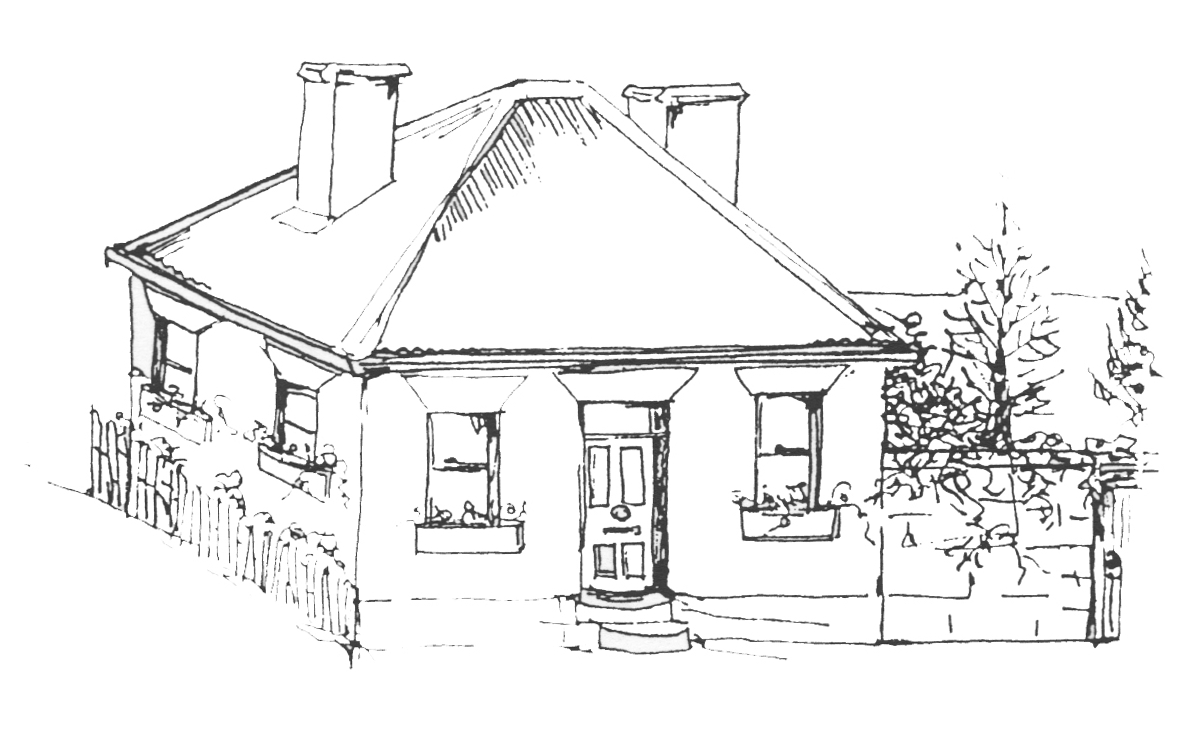
Shall it be Dove Cottage? We have been thinking of names for our very small house in Arthur Circus. For a house as small as this it’s difficult not to fall into the whimsical. I have found myself toying with Mouse House and my husband William favours Square One. And the house is a square one, being just twenty feet from the front door to back wall and twenty-two feet from side to side. In addition, there is a wooden section attached to one side, forming an L. This section contains an extremely modest galley kitchen and a bathroom beyond. Beyond that again, but only accessible from the courtyard, is a shudderingly dreadful moss-covered lavatory. The space enclosed by the arms of the L forms the courtyard and this, together with a sliver of garden on the other side of the house, is the whole property.

The purchase price of this marvel of modesty is ten thousand dollars. Ned, who lives two doors along in an even tinier house with blue shutters and a high pitched roof, shakes his head at this folly and says it will make the rates go up. He thinks it is a ridiculous price, which only foreigners like us would be silly enough to pay. He goes off muttering and I think with some uneasiness that we are probably forerunners of unwelcome change for the longtime residents of the Circus. Many of them work on the wharves, or used to work on the wharves. One lively old dame tells me that she was born in the Circus and hopes to die here.

Now we have had a chance to inspect the house more closely, my nervousness has increased. To begin with, there is a smell. It assails you when you open the front door. It is a ripe, mouldy, damp smell. Feverishly we strip layers of history from the floors. When they are all gone, to a suppurating heap in the courtyard, we discover there is a huge gap between the floorboards and the bottom of the skirting boards. Could this be the source of the smell? From this gap, with the aid of bent coat hangers, we fish hairpins, lolly papers, buttons and endless grime. We insert the nozzle of the vacuum cleaner and it brings out quantities more. But we never reach the end of it and finally, fearing it may be helping to hold up the walls, we desist.

But the smell remains. We remove piles of broken bricks from the courtyard, where they are piled up against the house wall. The bricks are covered with moss. Inside the bedroom, exactly matching the shape of the pile of bricks, is a stain of damp; more a sludge really. It had been hidden by a wardrobe when we did our first hasty glance around the house.

I have always regarded being house-proud as a vice, but this decayed slum is something else. We summon a plumber, who puts up new spouting, tears down the outside lavatory, remodels and rebuilds the bathroom and carts away the rusty bath. Meanwhile we tear out the dangling Hills hoist, which presides over the courtyard, digging up the cracked cement which is smothering the earth. We find layer upon layer of shards of willow pattern china in the process, as well as green bottles and ancient bones.

We are not handy. There are so many holes – we stuff polyfilla into so many holes in the aged plaster of the internal walls. We bang, we scrape, we scrub. Then we cover everything with layers of white paint. I am attacked by waves of conviction that we have made a terrible mistake. We have thrown away half our capital on this raddled wreck. I develop a breezy cheerfulness which, like the layers of white paint, is designed to cover the wreckage within.

Finally, the carpet layer comes. He strains and heaves and cuts. ‘Do you know,’ he says in exasperation, ‘there isn’t a single right angle in this house.’

When he has gone, we look about with astonished pleasure. Suddenly, what looked like a hovel looks like a house. We decide that, although we have not yet moved in, we must have a carpet-warming party.

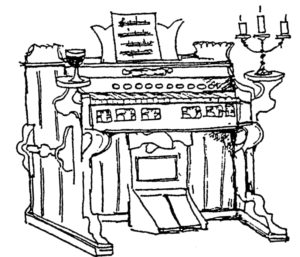
In the meantime we have made another impulse buy. It is an early American pedal organ, according to the catalogue, and it comes from Lenna, an imposing Italianate house built of stone, covered with creepers, and with a romantic overgrown garden, at the city end of Battery Point. It is to become, unsurprisingly, an expensive hotel-motel. It is easy to imaging gracious living occurring there in the nineteenth century, with gracious ladies admiring the view and businessmen (who are also gentlemen) studying the shipping in Sullivan’s Cove below.

It takes no time at all to turn our carpet-warming party into a carol-singing party although it is now getting on for Easter. We are festive, and sing and roar around the harmonium. Afterwards, we drink champagne and eat Christmas pudding with brandy butter and cream. Mount Wellington looms black above the city and the sky looks frosty. We resolve always to eat Christmas pudding in the autumn in Tasmania.

Page 13

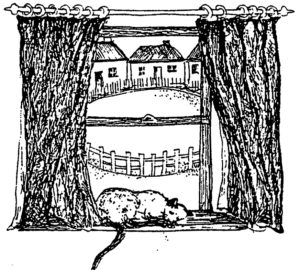
We have moved in. When I woke this morning, I looked out the window onto the Circus. All the little houses opposite were shining in the sun. I drank my coffee and watched the starlings and seagulls getting their breakfast on the grass in the middle of the Circus.

Eight for lunch, and we drink cold flagons of Riesling and eat minestrone with meatballs; this is becoming my specialty at Saturday lunches; afterwards bread and cheese, followed by a box of strawberries, fifty cents’ worth, divided scrupulously between eight of us. While we are drinking coffee, we see the very Reverend Michael Webber and Mary Webber driving and looking in. William runs to the door and waves them to a stop. A house on the street provides a vantage point for looking out far more than for looking in. Michael sails in stylishly in full canonicals, having just officiated at a wedding followed by a reception at Lenna, just opened and, according to him, very posh.

We have now finished the first draft, as it were, of painting the outside of the house. To begin with, we had a disastrous, aggressive little painter, recommended by Frank, the Italian who keeps, with overflowing kindliness, the corner shop. I think in this case Frank’s kindliness was directed not towards us but towards the small and aggressive painter, whom I’ve seen around with a pram and a folly of children.

He required a large sum to buy the paint and, after two hours’ work, required another large sum as progress payment. Thinking of the children, I reluctantly gave it to him; but after another four days of more than spasmodic, or possibly less than spasmodic, work on our very small roof, we had to dispense with him, giving him another slice of money. Luckily, various agile friends appear and finish off the steep bits, with ropes tied round the chimney and round their waists.

The house is now stone-coloured, with white windows and a charming white picket fence donated by our daughter Penny as a birthday present for us. The courtyard is paved with old bricks and now contains: a lemon tree, a Lombardy cherry, jasmine, honeysuckle, passion fruit vines, common and lemon-scented thyme, marjoram, sage, chives, rosemary, mint, garlic, capsicum, strawberries, forget-me-nots, phlox, dianthus, lavender, carnations, pansies, lobelias, catmint, evening primrose, Shasta daisies, celosia, pinks, violets, verbena, several unknown alpine plants, and in the corner a willow tree flourishing in a huge glass flagon filled with water. Its roots grow inches daily and visitors speculate, and so do we, on what is going to happen. I write down this list because I know that, when I am inhabiting the future, I shall believe my recollection was at fault about this multum in parvo.

The last few days there has been a keener nip in the air in the early morning and the mountain has a white tablecloth of cloud. I watch it from the kitchen window.

Spring

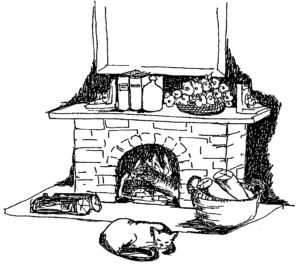
This little house is exactly right. I turn the corner, put my key in the door, shut the door behind me and I am filled with contentment. It is an unassuming small house, yet full of books, paintings, music and, far from least, warmth. Home and hearth. Sometimes it seems to me the hearth is the home, the living fire, before which one sits toasting crumpets and oneself.

The cats are there. Outside is the tiny courtyard with its herbs, lemon tree, old brick paving and enclosing walls. Beyond these are the shocking old rusty iron roof tops of Battery Point and, beyond again there is the bulk of Mount Wellington, which is sometimes blue, sometimes black, purple, grey, pink, white and, sometimes in winter, not there at all.

Where better to live than here? The river so close, with sailing boats and fishing boats, ferries, the university too; and the salient fact that Arthur Circus is classified ‘A’ by the National Trust so there is no need to fear a giant block of flats rising next door.

Not everyone is delighted by National Trust classification. I remember an elderly man in Yackandandah saying dourly, ‘Like some people have got cancer, we’ve got the National Trust.’

Page 56

A note comes flying through the letter-box slit in our front door – how I shall miss the mail posting through the door if ever leave here – summoning us to the Battery Point Society meeting, to protest about the threat of multi-density buildings, as they are oddly called, meaning blocks of flats, in Battery Point.

I have heard recently of a disease, which is the disease of chronic indignation. I have symptoms myself but nothing like as advanced as the case of the Battery Point Society. One man delivers a tirade against developers, real estate agents, the Council, and newcomers to Battery Point. However he finishes up saying handsomely, ‘We’re not against all units – some of them are very tasteful.’

The only dissentient to the general views is a nervously aggressive girl who asks what alternatives the meeting suggests for meeting people’s housing needs these days. It is a source of wonder to me how adept people are at not answering sensible, troublesome questions. This daring attempt to introduce some constructive discussion is triumphantly squashed by an elder statesman of the local community who produces from his pocket a newspaper cutting, which says every Australian needs a place to grow a flower or two and some vegetables. The meeting applauds; the nervous girl says no more, but looks unconvinced.

Tourists wander past. They do not know I am sitting at my desk by the window no more than two feet from them. They stop quite often. I eavesdrop eagerly.

“Isn’t it cute?’

‘But you wouldn’t want to give up your modern conveniences to live here, would you?’

‘Oh God no.’

‘Of course, all these houses are kept up by The Government.’ (If only it were true!)

‘Call this a circus – where are the performing lions?’

This kind of brilliant witticism is quite common.

I like best the deeply thoughtful woman who says, ‘Just to think that thousands of people throughout the world live in conditions like this.’

Page 64

Walking into town, I catch up with old, limping, solid Mrs Olsen from across the road. We’ve shouted ‘Good Morning’ across the road but, so far, that is all. Each morning she is kneeling on her stone step, polishing the brass front doorstep. It gleams richly. Mine is green and pitted and I am ashamed of it.

I enquire how long she has lived in Arthur Circus and she says she has lived there for forty-three years.

‘You must have seen a lot of changes,’ I say.

‘Changes! You’d hardly credit! See, you knew everybody then. You used to have t’git up real early to polish your doorstep; otherwise you’d be caught there and you’d be talkin’ for half an hour instead of gittin’ on with y’work. Oh it’s not like now. First of all they pulled down the big house along Runnymede Street and put up them flats, and now all sorts of strangers’ve moved in.’

By which she means us. And the College of Advanced Education lecturer on the corner. And the students renting the little house with blue shutters. Ned and his wife, the owners, have gone to Surfers’ Paradise for the winter.

Yet there are still some people living here who were born here; and some of them are still working on the wharves. Mrs Olsen’s daughters live near. One of them calls for her in her car every weekday afternoon. ‘The other daughter, we go to her place of a Saturday and Sunday.’

There is a National Trust Guided Tour of Battery Point this morning. In a surge of misguided hospitality I offer to entertain the select party to coffee at the end of the tour.

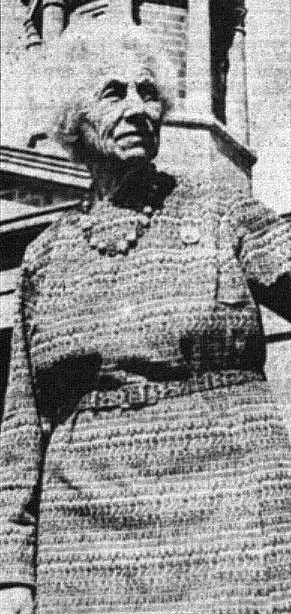
There are six of us in the party, five matrons and the guide, Miss Henslowe. Miss Henslowe makes a short speech saying she will be grateful to any of us who can correct her if she is wrong in any of her facts. This is unlikely, for Miss Henslowe is well known in Hobart for a fierce passion for local history. During the course of the walk she reproves us on several occasions for talking too much instead of listening. There is a certain amount of falling behind and giggling as the crocodile proceeds and I marvel at this personality, which can reduce five powerful matrons to giggling schoolgirls. ‘I believe she was a governess,’ someone murmurs.

We visit the dungeons of Parliament House, beautifully arched with a mixture of brick and stone and with the convict arrows visible on the bricks. Then to the Royal Tennis Courts and on through St David’s Park. Miss Henslowe is very angry with the City Council for cutting up and re-laying the old tombstones. I am sure she is right.

Miss Henslowe is a mine of information about the rich old family mansions and their past and present owners. She speaks approvingly of people who have bought old cottages and restored them. Restored them ‘correctly’ that is.

‘I always say that Battery Point’s trouble has not been neglect but an excess of love for their houses – by the wrong people.’

I am speechless. At that moment, I would die for the right of people to paint their houses purple.

‘If only,’ Miss Henslowe goes on, ‘they would seek advice from people who know. But of course many of them are not educated people. It’s only recently that Battery Point has become a good address.’

I must add here something that Miss Henslowe did not tell us, which is that she was instrumental in saving the charming little white-painted Methodist Church in Hampden Road from being pulled down to make way for a service station. It is now the Community Centre.

Dorothy Henslowe

Miss Henslowe
in 1987
from The Mercury

I take my stale rye bread and liverwurst and pickled walnuts to the little beach at the foot of Napoleon Street. The tide is out. Hundreds of sea gulls swim and squabble near the storm water outlet. I am reading peaceably when I am set upon by a large woman whom I know slightly through a neighbour. Her name is Flora.

She tells me about one of the men in the boarding house where she lives. ‘He is,’ says Flora, ‘a bit strange. The other day he attacked another resident with a pair of scissors. It took eight policemen to strap him down.’ Flora gazes at me raptly and takes a step closer. She adds that she herself saw him being carried out, head lashing and foaming at the mouth.

‘He’s back from hospital today,’ she says.

‘Is he having lots of medication?’ I ask doubtfully.

‘Oh no. He doesn’t believe in it.’

‘Good God!’ I cry. ‘Don’t the rest of you believe in it?’

‘Well, but what can we do?’ says Flora sulkily. ‘It’s none of our business. Anyway, it was a full moon when it happened.’ I look at her like a startled rabbit.

‘But won’t you all be feeling a bit tense when the next full moon comes around?’

Flora smiles. ‘Ah, the full moon…’ she says softly.

Summer

Christmas is upon us. At night to the Christmas party of the Battery Point Society. As is usual with such societies, this one is divided between those of a developmental turn of mind who see progress as new buildings and wider roads for better car access, and those who see progress as placing more impediments in the way of through traffic and planting more trees. The party takes place in the small and charming community hall, which Sir Alfred White tells us, was nearly replaced some years ago by a service station. The service station protagonists offered five thousand pounds but the Methodist Church, who owned the building, sold it to the Battery Point community for four thousand pounds. Thank God, one should say.

The hall is half full. Along the walls are timeless trestle tables, with sandwiches, cream cakes, biscuits, cheese and casks of wine. Before we can eat, we listen to a speaker, a bearded, beaming man from the Environmental Design School. He explains to us the history and also the proposed future of the small park in de Witt Street, which backs onto St George’s church. The land concerned was forcibly resumed by the Hobart City Council from the church, which had intended to build units for elderly people on the site. When he finishes, we turn our attention to the cream cakes and wine.

We hear that the first yacht in the Sydney-Hobart race is due at the finishing line in fifteen minutes. We all fly about and hurry round to Princes Park in a cold wind, I with a blanket around my shoulders. The splendid vessel is making its way up the river, red white and blue spinnaker bulging triumphantly, hundreds of small craft puttering about and a few windsurfers skittering across the water like small gay seabirds. The finishing gun goes off, the spinnaker is hauled down and then, under power, the great boat slides round to the dock, with a ferry beside it on which a band is playing.

Salamanca Place is full of Fiesta. I wander up and down the open-air art exhibition. There are 347 paintings on display, says the catalogue. Many of them are quite bad but who cares? The sun is shining, the yachts are coming in, it is Christmas time and holiday time. People are strolling about, smiling.

Page 124

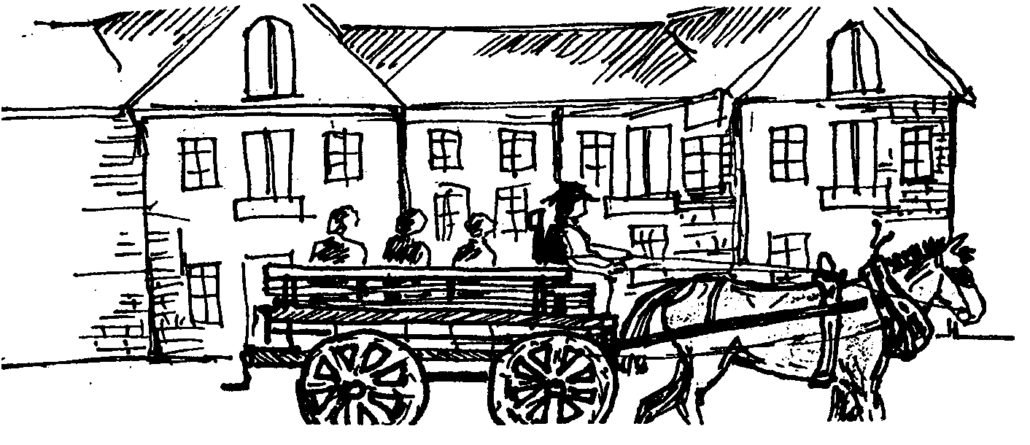
Walking back home through Salamanca Place after a walk on the mountain, I see a sign offering rides in a cart pulled by a draught horse along to the end of the wharf and back. I pay my fifty cents, somewhat abashed at being a lone adult without a child for protection. It reminds me of my niece saying she borrowed a child from a passer-by so that she could have a ride on a merry-go-round. Then a man gets on with a little boy, someone runs along behind to shut the gate in the back of the cart and we are off. I ask the brown, rough-looking young man in the broad-brimmed hat who is driving to tell me about the horse.

‘Eight years old. Not many of them about these days. I’ve got two mares, both in foal. This one was nearly dead when I got him; he’d been eating nylon twine around the hay.’

I listen raptly. At the end of the wharf we perform a broad sweeping turn and the young man says, ‘Gee up!’ Our splendid steed breaks into a lumbering trot. ‘I could go round the world at this pace!’ I cry yearningly.

‘So could I,’ says the young man.  ‘In fact,’ he says, ‘if it’s the last thing I do, I’m going to harness another draught horse with this one, put a roof over the cart and I’m going right round Tasmania. If it’s the last thing I do.’

I am enchanted. ‘Do you want a cook?’ I say.

Whatever we have failed to do in life, we have at least introduced Richard (later Professor of Education) and Rachel Selby Smith to the pleasures of a counter tea, which they might never otherwise have discovered. They are distinguished, widely read, adventurous people and among our dearest friends here but not, I think, people who would be familiar with the concept of counter meals.

We meet at the Prince of Wales, a clean, cheerful, hideous brick building raised on the site, I believe, of a charming old pub, small, dark and down-at-heel, and several cottages as well, in Battery Point. It and its asphalt car park are an aesthetic disaster and a disgrace to the historical sensibilities of the City Council, which allowed its construction. However, time passes and soon we are enjoying roast lamb and apple pie.

Autumn

I have been round the three bed-and-breakfast places in Battery Point, making bookings for the visitors who will be coming from ‘the Mainland’ for Penny and Ken’s wedding. The Cromwell Cottage landlady is breezy, cheerful, and warm; the one at Barton Cottage is ladylike, reserved, grave and fussy. The Colville Cottage lady gives a little cry of delight when I make a secret booking for the wedding couple. ‘I’ll put out the goblets and champagne,’ she promises.

I walk along Hampden Road in high good humour after this encounter. Hampden Road is the main road through Battery Point. Although it is not yet quite dark, the shops have their lights on. Mt Wellington is towering blackly against the darkening sky. People are going into Dirty Dick’s for dinner; the white walls of the old Methodist church, now the Community Centre, gleam in the light from the street lamps; people are busy in the two little general stores. The windows of the antique shops are lit up; people peer in. An occasional car drifts down the road. Muted music comes from the Mexican restaurant and people are sitting in the window of The Fire Kettle, chatting and drinking. The road curves as it heads downhill.

The river is only about four hundred yards away, down a small side street. There is a low chain across the road and beyond, darkness. The water laps on rounded stones and the white hulls of yachts rock peacefully at anchor, faint shapes in the darkness, which is now deep and complete. I like to think of the river there, so quiet; and people enjoying themselves, not raucously, in all the little restaurants; and walking in the streets peacefully, not having to glance over their shoulders, just walking calmly and unfearfully. Battery Point is now no longer a village but it is not a town or a city either. It is a place for friendliness. It is charming.

There have been more tourists walking around taking photos this year than I can remember. Some stop and read our LIVE SIMPLY SO THAT OTHERS MAY SIMPLY LIVE sticker on the window. A grey-haired woman stops, reads it out and laughs madly. ‘Christ,’ she says, ‘it couldn’t be any rougher than ‘ere, could it?’ Another passing tourist says, ‘These seem quite reasonable; scarcely slums at all.’

When I sit at my desk, I watch the spectacle of people on their way through the Circus. Most don’t notice me sitting at the window. They pass no more than four feet from me so I can hear snatches of conversation if they are talking aloud; but I note that in the last hour and a half four people have been talking to themselves as they walk by. What can this signify? Of course I also carry on conversations in my head, and arguments too, in which I invariably bet the better of my adversary. Do I actually mutter?

Jan and David Muir, coming in for a drink, ask us exactly what we mean by ‘living simply’. Drinking our excellent martinis, we try to explain! Afterwards, sitting in the darkening room by the fire, William exclaims again and again about the magic of Now: the fire, us together, the Gregorian chant we are listening to, this little house. ‘This is permanent,’ he says, ‘this is for ever.’ For him, only the past is secure and can’t be taken away. What we have had we have had. I don’t have the same strong feeling about the past: I need to be told it often. This diary is my way of securing the past.

Alan Milne lives in an odd two-storey house in one of the narrow streets leading to Kelly’s Steps. The bottom front room was once a shop and still has the shop window. Alan has filled this window with specimens of calligraphy, obscure quotations from medieval poets or church fathers, done on parchment in various scripts, with gay and charming illustrations. Upstairs, in the top flat, behind scarlet blinds, live two prostitutes. On Alan’s front door is a sign written out for him in Japanese requesting Japanese seamen to go round the back of the building and up the back stairs. At least he hopes that is what it says.

A bearded Canadian arrives at 6.00 pm to inspect this house with a view to an energy-saving program. He climbs up onto the roof, climbs down, climbs through the manhole into the attic, shakes all the windows, shakes his head, unscrews the hot water tank, lowers the water temperature, screws it up again, drinks two glasses of white wine and eats some bread and cheese, does rapid calculations of costs and gives us an estimate, which he says he will confirm and put in tomorrow’s post. This he actually does.

Earlier, we had invited help from Aussie firms old-established in Hobart. The first were supposed to get in touch with me but, when after some days I rang them, a man came, said he’d have to come back again ‘probably next week’, and there the matter rests. The others wanted to sell me a loft ladder but, when I asked about installations, merely said, ‘We could put you in touch with somebody who could do it.’ I am as ever baffled by this reluctance on the part of Australian small businesses to want business.

Bearded Canadian dusts himself down, drinks the last of our wine and takes himself off in large truck.

Met Ben Ryan in De Witt Street, carrying a Japanese parasol and a paper bag containing half his lunch. He wants to talk about his nasty cheese sandwich which ‘she’ has given him; but I tell him I am more interested in why he is carrying a Japanese parasol. He says, to keep the rain off and adds that he is usually carrying his Union Jack bag as well, though not on this occasion.

I am drunk with love of Tasmania on these autumn mornings when the sun shines and the water sparkles as effervescently as if the river itself were in a party mood. It is like a Billy Graham conversion. I can only dimly remember what it was like before the summer, when leaden skies poured an icy rain on the sad green and grey gum trees and steely mountains, and unremitting wind blew. Yet I distrust conversions. Will they hold up under adversity? (By adversity I mean Tasmania’s climate for the major part of the year.) On days like this I think like an old Tasmanian – that there is no other place so wonderful in all the earth. But in the sad days of a winter that declines but never dies – until February anyway – I sometimes have the feeling that one is ‘by the world forgot’, without the pleasure of  ‘the world forgetting’.

William goes off to a meeting and I sit up in bed, scissoring-and-pasting absorbedly on some writing. About half past nine there is a knock at the door. It is an unknown young woman, who enquires politely whether we are the Assemblies of God. ‘No, we are not,’ I say with I hope equal politeness. She is not going to be put off by this and says that she is ‘in need of spiritual comfort’. Although I am not convinced I am the person to supply this, I can at least give her a cup of tea.

She has fled from her violent husband on the mainland, changed her name and doesn’t know anyone in Hobart. ‘Then how?’ I begin to think, but she goes on. She spent last night at the Women’s Refuge where, she says, there are twenty-nine children and eight or nine mothers. They are not, she says, nice people at all.

This is dreadful if true. I am sure her story is true and yet, as she runs on, into my mind pops the unbidden thought: Is she ‘casing the joint’ for future burglary? This is obviously absurd and untrue, and I press more tea and biscuits on her and her child and redouble my efforts to be practically helpful. She finally pushes off into town with lists of addresses of organisations, which might be helpful though not, I fear, the Assemblies of God.

Winter

William has been offered a scholarship and we are to spend a year in Cambridge. I am over the moon about this and simultaneously apprehensive. How shall we ever be able to leave this house? I have been in the kitchen, preparing the field mushrooms we picked yesterday on top of the Woodbridge Saddle. The kitchen is, to be honest, hopeless. It measures seven feet by five and has three doors. It is the passageway to the bathroom and to the courtyard. It is a kitchen which demands exquisite manners from anyone working there and anyone passing through. ‘Excuse me’, you say constantly. ‘Sorry’.

The front door is open. There is a heavy woollen curtain, yellow, lined with Black Watch tartan, across the opening. The curtain is not stirring. No wind. There are mountainous grey clouds over the western half of the sky. Mount Wellington is only partly visible, a dark navy blue between the obscuring grey cloud curtains.

In the late afternoon, the front door is still open. People stroll past, the other side of the yellow curtain. I love a door opening directly on to the street. When I sit on the step in the sun with my book or paper, I feel like a Classic Old Woman.

The clouds vanished while we were eating our pasta with mushrooms and half a bottle of Jacobs Creek red wine. After that I could easily have fallen onto the bed to read and doze away the afternoon, which is not, according to my philosophy, a waste of time; but instead we walk down to the docks in the breezy afternoon, admiring the Italianate look of the stone and painted brick warehouses across Sullivan’s Cove, with dark shapely cypresses and the stone cenotaph rising up on the hillside behind them and, further back, the blue horizontal lines of the distant hills. It is a beautiful bird’s eye view.

We are saving money, and by no means at the expense of ‘living’. We came to Tasmania with a view to ‘living simply’ and we haven’t regretted it. It hasn’t all been wonderful and we have been made aware, rather painfully, that none of our children will return here to live and work. But we have proved a modest something to ourselves. Our house has been sub-standard by Australian standards; but we have loved it. We haven’t lost any friends by it, that’s certain. We have lived frugally but this doesn’t forbid pasta and wine and bread a cheese and fruit and vegetables, some even homegrown in our tiny courtyard. A few hundred yards away we have had all the liveliness and colour, as well as the beauty, of Salamanca Place and the river. We have had lots of treats; when you live according to a budget, a treat, a blowout, a splurge, is really something. It has always been obvious to me that the best way to live life is not on a level straight line but on a series of hills and gullies, feasts and famines.

There is a leisured class. To it belong Mrs ‘ayes, our next door neighbour, and Ned and his wife who live in the house with blue shutters – these are retired people, so one expects them to be leisured. They live comfortably on the age pension for they own their tiny houses and don’t even need to own a car, for everything they want – the markets, the pub, the department stores in town, the cinema, the footie and the docks (they are all former dock workers or the relicts of dock workers, and the docks are just at the foot of the hill from here) are within walking distance – or, if they don’t want to walk, there is the Battery Point bus, of all buses surely the most companionable. There are also various young women who live in the house next door to Ned and his wife – I think not prostitutes; they have children of various ages playing in the gutter or kicking a football in the middle of the Circus. All these people spend hours lounging in the sun, leaning over each other’s fences, in small clusters or shouting from their front doors at each other. They are AT HOME in the Circus in a way that I am not; their children monopolise the swings and ride their bicycles and tricycles with whooping and screaming round the paths. The older ones sometimes swear at the children and chase them home but mostly they are too busily engaged in their own gossiping and shouting to take much notice. This endless accompaniment of human noise is partly at least the reason for our double-glazing the windows which look onto the Circus. But what you gain on the roundabouts you lose on the swings and I cannot now eavesdrop the conversations which go on under our windows.

Perhaps as compensation, I have taken to drinking my mug of morning coffee on the wooden bench in the middle of The Circus green. This morning bulging Miss Bonney sits down beside me.

‘D’jew eat turkey?’ she enquires.

She says she has eaten a hindquarter yesterday, finishing it off at ten o’clock at night with three slices of hot bread,

‘I felt awful all night,’ she said. ‘Would that make you feel awful?’

She goes on to ask whether I like living in Battery Point. I assure her I do and she says, ‘I love every house in Battery Point, every single house.

Take me away from Battery Point and I’d die. I haven’t been into the city for seven years. I can’t leave m’mother. The hospital nurses are wonderful, they come in the morning to get her up and at night to put her to bed and to help me turn her over and, do you know, ten of them have come and eight of them have been deserted by their husbands.’

‘I’m not religious m’self, are you religious, I think having so many sorts of churches makes them all ridiculous, don’t you, I’m not a religious person but I’m a good person, I haven’t been different since the day I was born if you see what I mean, and I hate all the vi’lence in the world and I hate these five-minute marriages, think of it, all them nurses deserted by their husbands, it’s terrible isn’t it?’

‘My mother worked hard. She bought the shop, oh yes, we used to have the corner shop.’ She gestures towards Frank and Tina’s shop, which is, even more than the pub, the warm centre of the Battery Point community. ‘Then my mum bought them flats. She always said she didn’t want to be a pensioner, she wanted to be independent, so she went into the bricks and mortar. And the shop – oh, we couldn’t go wrong in the shop – l suppose I had a bit of personality – and we got a few pounds together, and you could do that sort of thing in those days, get into bricks and mortar, if you had put a few pounds together.’

She picks up her shopping bag and lumbers to her feet.

‘Aren’t I fat?’ she grins fatly. ‘I’ll eat no more of that turkey and hot bread. Until I weaken. Well. I come of a fat family.’

She walks away and then comes back. ‘I’d only like to have a drive into the country some time. It’d be nice to get into the country. But I can’t leave my mother.’

I say I will take her for an hour’s drive into the country any time. She brushes this aside. Looking after mother is her life. Wanting is better than having.

‘It’s been nice to find out something about you,’ she says. ‘It brightens up my miserable life.’

We are packing up. House is let for a year to an estimable couple without children, both of whom have jobs. One certainly sees things differently when wearing a landlord’s hat. I find it interesting that no single mothers with children showed up. I wonder whether we’d have reasoned ourselves out of having them. Luckily, not put to the test. I’ve heard that bit of the Lord’s Prayer, ‘Lead us not into temptation’, sometimes translated as ‘Do not put us to the test’.

We have run out of wood, so visit Woodbridge Saddle again. We want to leave some for our tenants. While in the mode of biblical quotation, it seems to me that ‘to cast your bread upon the waters and it shall return to you’ is both a pleasant and self-interested way of proceeding through life

Spring

Next month it all begins. Or ends. I am apprehensive as ever about major change. I shall probably not be writing this record for a while as the tide of life rises and floods my little pond. Yet there is no ending. Life goes on, like the weather, fair and foul, foul and fair; it’s no use worrying about approaching hurricanes.

The main thing is to be present where you are, while you can.

William Plomer, a poet and a civilised man, says: ‘The task of civilisation lies in adding to what may be loved.’ He speaks in a poem about his own good fortune, which is also mine.

Not hungry, not penniless,
Not deaf yet, blind or lame,
Not yet in the poor-house,
Precarious to be me, here, now!

Not yet in the pest-house,
Mad-house, dead-house,
But outside a dwelling
In August, in a long chair, musing.

But while a whim can change
Us all to glass and gas,
As if all’s well
We swim towards the stars.

Let the wren build its nest
Next year, as it did this,
If it can, if it’s here.
We live by an As if.

Note: We did come back to Tasmania.

© Copyright - Battery Point Community Association

Your file has been uploaded